Tree Service In Four Corners
Healthy Trees. Four Corners' Family-run Arborists
Serving Bozeman, Belgrade, Livingston, Three Forks, Four Corners, Manhattan, Gallatin Gateway & Big Sky
Four Corners Soils and Tree Roots Don't Always Get Along
The Gallatin Valley floor beneath Four Corners is built on alluvial soil – shallow, dense, and slow to drain. That soil profile shapes nearly every tree-health decision in the area. Water sits near the surface longer than most people expect, and roots respond by spreading wide and shallow rather than anchoring deep.
Cottonwoods are a good example. They grow fast and look healthy right up until a wind event exposes how little the root zone was actually holding them. Shallow, saturated soil gives those roots nowhere to go, and crown thinning only helps so much when the anchoring problem starts underground.
If you have a spruce or cottonwood within falling distance of your home, driveway, or fence, that soil condition matters. Dead branches and crown dieback can signal root stress long before a tree becomes a fallen tree problem. Catching those signs early is what good tree care looks like in practice.
The same conditions apply whether you’re on a tight lot or managing a larger acreage parcel. The soil doesn’t change with lot size. An ISA Certified Arborist can assess the root zone directly and tell you what you’re actually dealing with – not just what the tree looks like from the street.
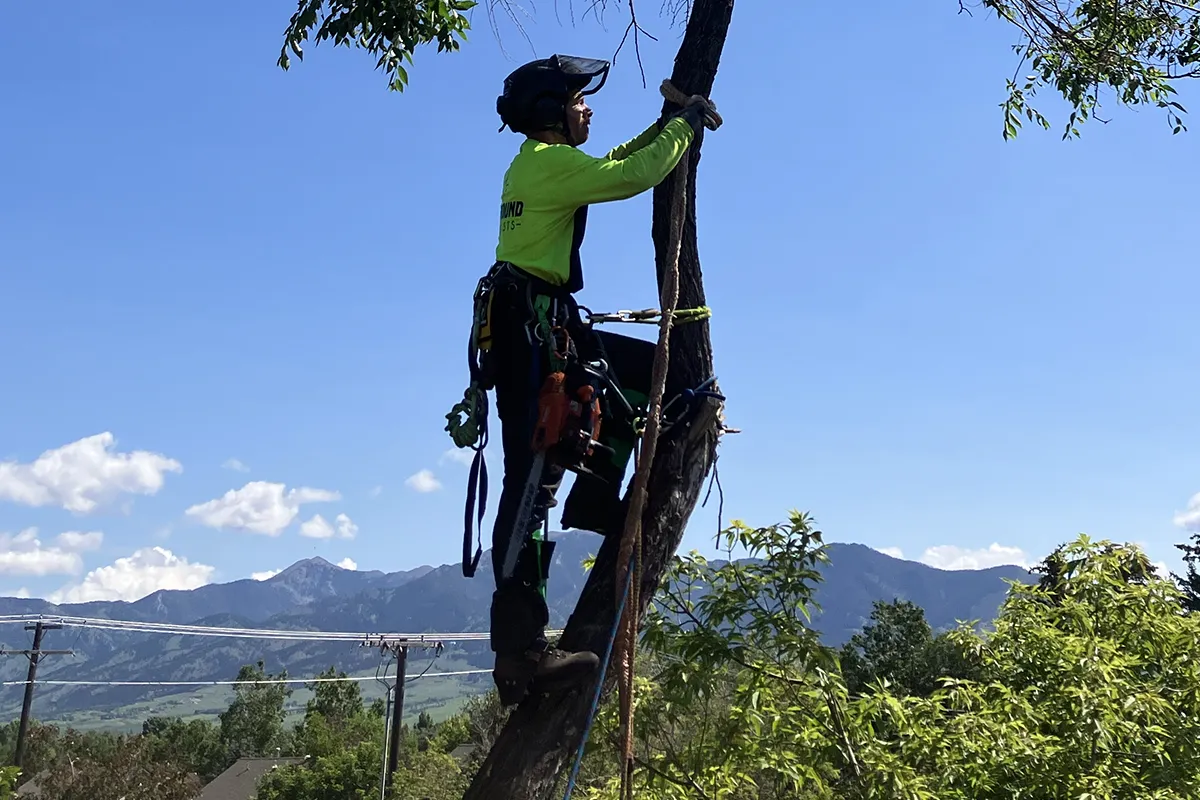
Southwest Montana’s Trusted Arborists Since 2015


 Trustindex verifies that the original source of the review is Google.
 Trustindex verifies that the original source of the review is Google.

 Trustindex verifies that the original source of the review is Google.
 Trustindex verifies that the original source of the review is Google.
 Trustindex verifies that the original source of the review is Google.
 Trustindex verifies that the original source of the review is Google.
 Trustindex verifies that the original source of the review is Google.
 Trustindex verifies that the original source of the review is Google.
 Trustindex verifies that the original source of the review is Google.
 Trustindex verifies that the original source of the review is Google.
Our Services
At Rootbound Arborists, we provide expert tree care for homeowners, HOAs, and commercial properties. Our skilled team is dedicated to maintaining the health, safety, and beauty of your landscape, ensuring every job is completed with precision, efficiency, and the highest standards.
Tree Removal
Safe, professional, and hassle-free tree removal to protect your property and restore your landscape with ease.
Tree Pruning
Expert, precise, and hassle-free tree pruning to promote healthy growth, and ensure safety for your property.
Tree Risk Assessment
Comprehensive tree risk assessment to identify hazards, and ensure safety through expert evaluation and care.
Plant Health Care
Comprehensive plant healthcare services to diagnose issues, enhance growth, and ensure long-term vitality.
Land Clearing
Efficient site preparation for safe land clearing, grading, and vegetation removal.
Wildfire Preparedness
Fuels reduction and wildfire management for safety and property protection.
Stump Grinding
Efficient stump grinding services to remove tree stumps, prevent regrowth, and restore your landscape’s appearance.
Cabling & Bracing
Professional cabling and bracing services to support weakened trees, reduce risk, and promote long-term stability.
How a Formal Tree Risk Assessment Gives You Documented, Qualified Direction
Most people assume a leaning or storm-damaged tree has one outcome: it comes down. That assumption is understandable, but it’s often wrong.
A proper tree risk assessment frequently reveals alternatives. Depending on the species, root condition, and lean angle, options like tree cabling and bracing or structural pruning can stabilize a tree and extend its life without removal. Not every hazardous tree is a lost cause, and you deserve a qualified answer before making that call.
ISA Certified Arborist status and TRAQ qualification aren’t just letters after a name. TRAQ, the Tree Risk Assessment Qualification, is a formal credential that allows arborists to produce structured, documented risk evaluations. If you have a storm-damaged tree near a fence line or driveway, that documentation tells you exactly what you’re dealing with and what your options are.
If a tree does need to come down, technical tree removal in tight residential lots requires precise planning. Licensed and insured crews matter here, not just for your protection, but because hazardous tree removal in close quarters leaves no margin for error.
A documented assessment gives you something concrete to act on, whether that means treatment, monitoring, or removal done right.
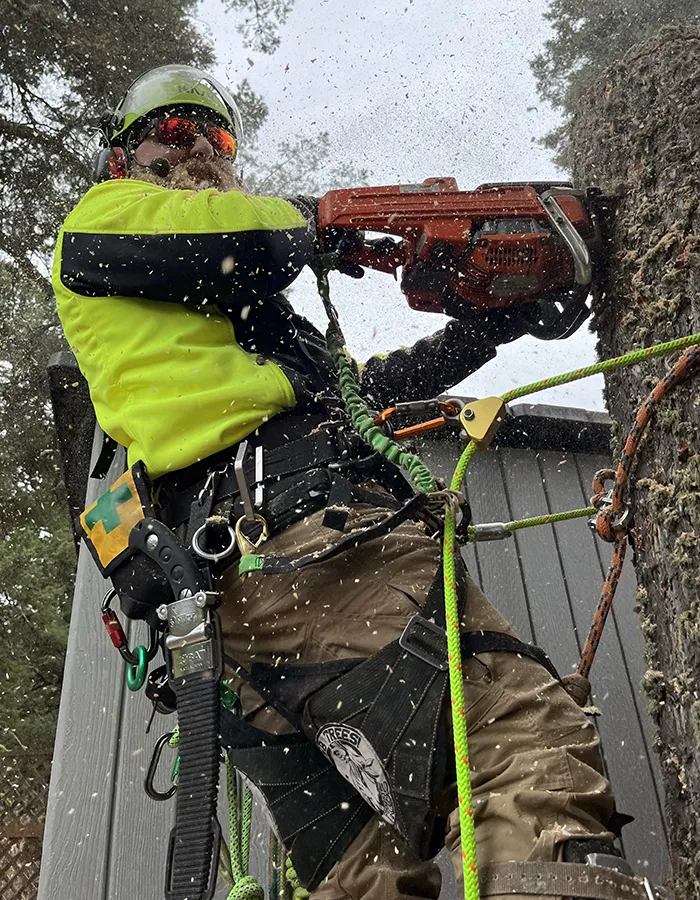
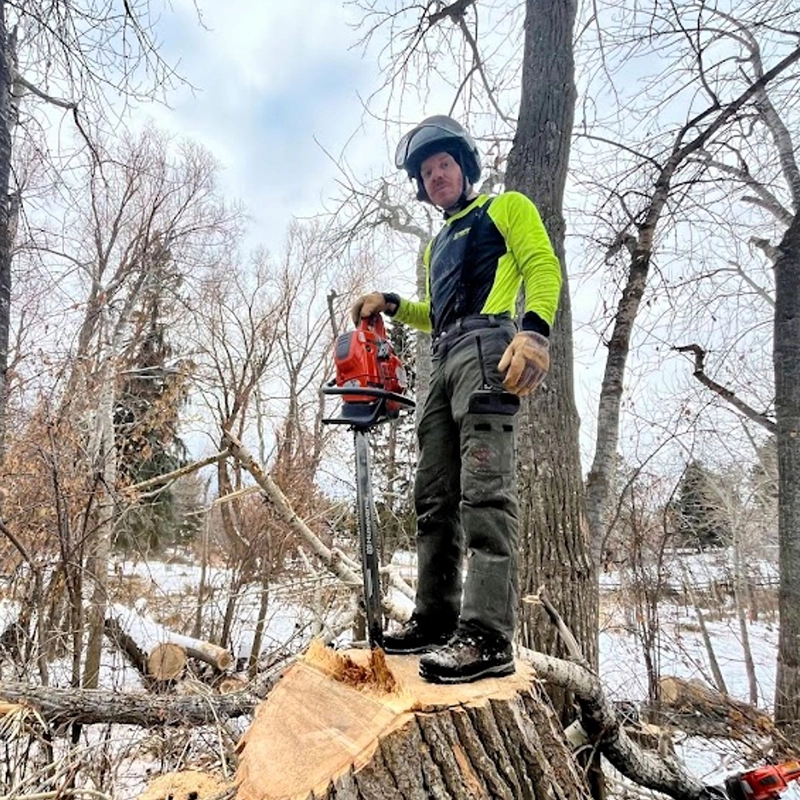
What Actually Happens When Rootbound Shows Up to Your Four Corners Property
Every job starts with a free estimate and a walk of your property. Ben reviews the tree up close, looks at what’s around it – your fence, driveway, neighboring yard – and asks what you’ve noticed. No assumptions, no clipboard pressure.
From that walk, you get a plain-language explanation of what work makes sense. Whether that’s tree removal, tree trimming, crown cleaning, or stump grinding, we explain the plan before we touch anything. If you have questions, now’s the time to ask.
If you’re on a tighter lot, property damage prevention isn’t an afterthought. We plan rigging, drop zones, and ground protection before the first cut. We account for your lawn and your neighbor’s fence from the start.
The actual work – tree pruning, stump removal, debris removal – is handled by the same crew that walked the property with you. No handoff to a different team mid-job.
When the work is done, the crew cleans the site completely. The crew takes chips, brush, and cut material with them. You’re left with a cleared property and a clear picture of what was done and why.
Waiting on a Stressed or Diseased Tree Doesn't Put the Problem on Hold
A diseased tree doesn’t stay at the same stage while you decide what to do. Fungal growth at the base, dead branches in the upper canopy, or unusual bark texture are early signs that something structural is already changing inside the tree. Left alone, those changes compound.
Fungal fruiting bodies indicate decay that’s already progressed into the wood. Bark beetle activity leaves behind pitch tubes and fine sawdust along the trunk – visual signs that a population is actively working through the cambium layer. By the time either is obvious from the ground, the internal damage is typically well ahead of what you can see.
If you have ash trees on your property, Emerald Ash Borer is a real concern in this region. Mountain Pine Beetle has significantly affected Montana’s pine populations. Both species move fast, and both turn a manageable plant health care situation into a necessary removal.
That progression is the actual cost of delay. A tree health assessment early enough often opens options – targeted pruning, trunk injection treatments, or a structured tree fertilization program to support recovery. Wait longer, and those options close. What starts as a pest infestation or localized disease can advance to full structural failure, where removal is the only remaining path forward.
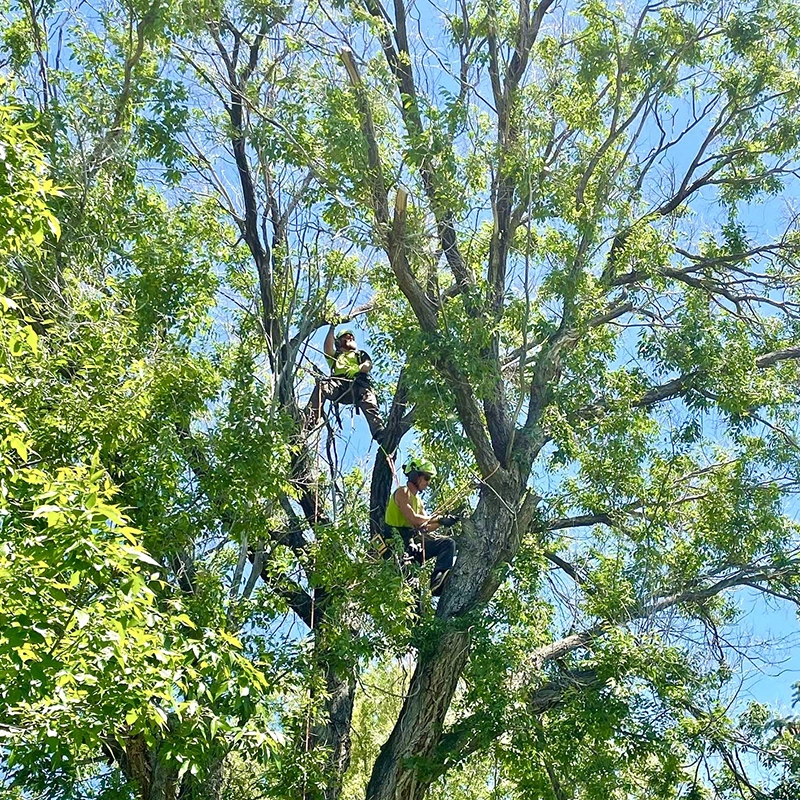
How to Get a Free Estimate From a Local Arborist Who Knows This Area
Say you’ve got a cottonwood at the back of your lot and you’re not sure if it needs to come down, needs pruning, or just needs someone qualified to take a look. You don’t want to commit to anything yet. You just want a straight answer from someone who knows Four Corners properties.
That’s exactly what a free estimate is for. An arborist walks your property, looks at the tree in context, and tells you what they see in plain language. You decide what happens next.
Four Corners is a named stop on the regular service route, not a detour from Bozeman jobs. Whether you’re on an acreage lot or a tighter subdivision parcel, the service is the same: a tree inspection focused on your specific site conditions.
Services available range from tree planting and seasonal tree care to brush clearing, land clearing, fire prevention work for acreage owners, and commercial tree service for non-residential properties. If something comes up that needs immediate attention, we offer 24/7 emergency response and emergency tree service.
If you’ve been putting off the call because you weren’t sure who to contact or what it would cost, a free estimate answers both questions with no obligation attached.