
Stump Grinding Service In Big Sky
Professional tree services across the Gallatin Valley. Certified. Insured. Proven.
How Stump Grinding Gets Done In Big Sky
At roughly 7,000 feet near Lone Mountain, the soil profiles that support Big Sky’s native conifers are nothing like what crews encounter in lower Montana valleys.
Requesting a Stump Grinding Service in Big Sky means working with rocky, compacted substrate that resists standard grinding depths and tests equipment that wasn’t built for high-elevation terrain. Gallatin County properties sit on ground that shifts between shallow decomposed granite and dense clay pockets, depending on whether you’re in Meadow Village or higher up near Mountain Village.
Lodgepole pine, Engelmann spruce, and subalpine fir are the dominant species on Southwest Montana properties, and their root systems spread widely and anchor well. These large trees develop lateral roots that extend well beyond the stump perimeter. A crew unfamiliar with them will undercut the grinding radius and may leave you with regrowth problems within a year.
That Leftover Stump Near Your Deck Is a Bigger Problem Than It Looks
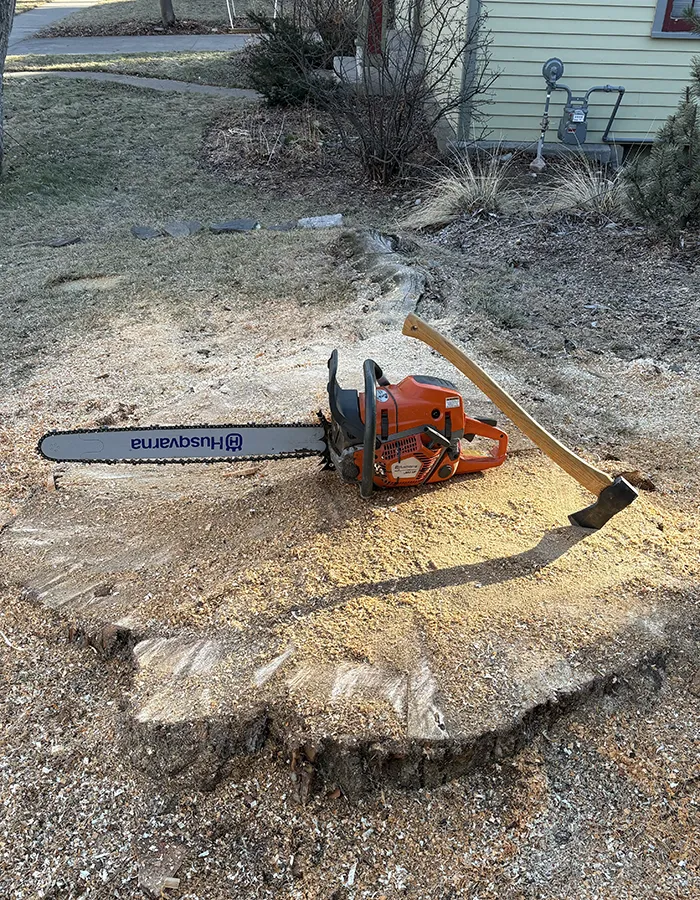
A stump sitting two feet from your walkway is a tripping hazard waiting to catch someone off guard. In Big Sky, where vacation properties host guests who don’t know the yard layout, that risk compounds quickly.
Decay doesn’t stay contained. A rotting stump draws bark beetles and wood-boring insects that will move on to your healthy standing trees once the stump stops feeding them.
Fungal pathogens travel through shared root zones the same way, quietly undermining tree health long before you see visible damage above ground.
If your property sits anywhere near the Gallatin River corridor, there’s another layer to consider. Decomposing woody material in riparian zones intersects with environmental sensitivity in ways that stump removal services address directly and efficiently.
Frequently Asked Questions
Why Does A TRAQ-Qualified Assessment Before Grinding Protect More Than Just the Stump Site?
ISA Certified Arborists through the International Society of Arboriculture aren’t just credentialed tree workers. That certification requires demonstrated knowledge of tree biology, root system behavior, and how decay in one tree affects the health of neighboring plants.
TRAQ qualification takes that further. A Tree Risk Assessment Qualified evaluator reads the full picture before a single blade touches the ground, including whether a decaying stump is compromising adjacent root systems, introducing fungal pathogens into shared soil, or creating structural instability in neighboring trees.
If you have mature trees near the stump site, that health assessment step isn’t optional. A rotting stump can quietly transfer disease to a healthy conifer two root zones away.
Treating stump grinding as a standalone task misses the point. It’s one part of a broader plant health care strategy, and the tree care services that deliver lasting results are the ones that evaluate the whole site, not just the hole left behind.
What Happens When Rootbound Arrives at Your Big Sky Property to Grind a Stump?
Every job starts with a free estimate. Before any equipment moves, the crew walks the site, identifies the stump dimensions, checks access for the grinder, and notes anything nearby that needs protection during the work.
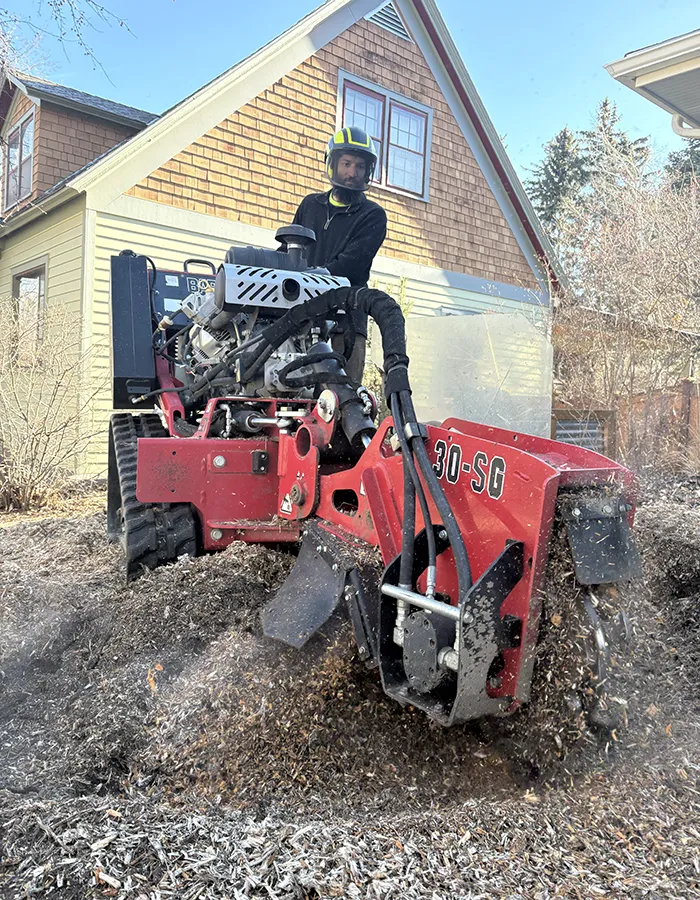
Grinding depth is the question most people ask first. The machine works down 8 to 12 inches below grade, removing the structural root mass and leaving the area ready for landscaping services or new planting. Full root extraction isn’t part of stump grinding services, but for standard lawn reclamation or land clearing purposes, the depth achieved is more than sufficient.
If you’re coordinating a vacation property from out of state, you talk directly with the crew member handling your job. That matters when you need accurate timing and a clear answer on what the site will look like when the work is done.
Why Shouldn’t I Wait To Remove My Stump?
Picture this: you had a tree removed two years ago, left the stump, figuring you’d deal with it later. Now there’s a cluster of shoots pushing up around it and soft rot spreading into the root collar of the spruce beside it. That’s not an unusual scenario, and it’s exactly the kind of situation that turns a straightforward grinding job into something more involved.
Decaying stumps don’t just sit quietly. As the root mass breaks down unevenly, regrowth becomes harder to suppress, and the mechanical complexity of grinding increases. Adjacent mature trees can draw pathogens through shared soil networks long before you notice anything visible above ground.
If you’re managing the property with an eye toward curb appeal, landscape design updates, or defensible space compliance, a leftover stump undermines all of it. Fuel reduction matters in Big Sky, and a rotting stump counts as ground-level fuel.
Reach out to Rootbound Arborists for a free on-site estimate. An ISA Certified Arborist will walk the property, evaluate the surrounding trees, and give you a clear scope of work, including grinding depth, debris cleanup, and what the site will look like when we’re done. If you’re managing the property from out of state, we’ll handle the visit on our end and send photos and a written quote before any work begins. Call for an estimate today.