
Wildfire Mitigation Service In Big Sky MT
Protecting Big Sky Families and Forests, One Property at a Time
How Gallatin National Forest Boundaries Shape Fire Spread
Big Sky sits directly inside a wildland-urban interface zone where Gallatin National Forest presses against the edges of Meadow Village and Mountain Village with almost no buffer. If you’ve been looking into Wildfire Mitigation Services Big Sky MT, the terrain itself explains why that search matters. Lone Mountain’s drainages funnel wind in ways that accelerate ember transport toward residential structures faster than most people expect.
Bark beetle and pine beetle damage has left standing dead timber throughout the surrounding forest. Those snags don’t just look hazardous – they represent a dramatically elevated fuel load that feeds crown fire spread before a fire crew can respond. Conifer encroachment on private lots compounds this, narrowing canopy spacing until ladder fuels connect the forest floor directly to the tree canopy above your roofline.
Meadow Village and Mountain Village have different vegetation density profiles, so your defensible space needs depend heavily on your property’s location. What qualifies as adequate ladder fuel removal in one area may fall short in the other.
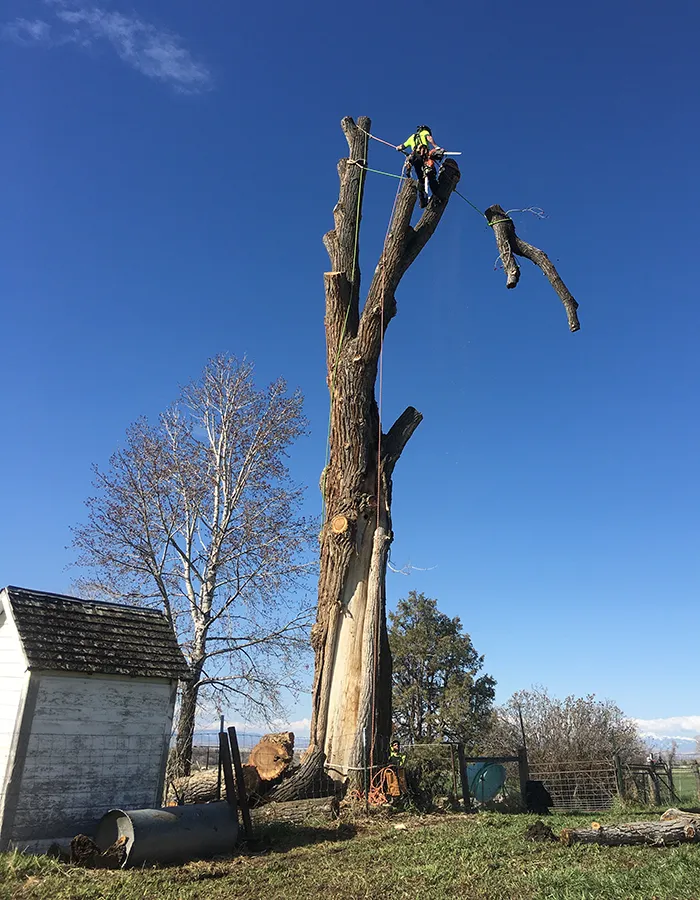
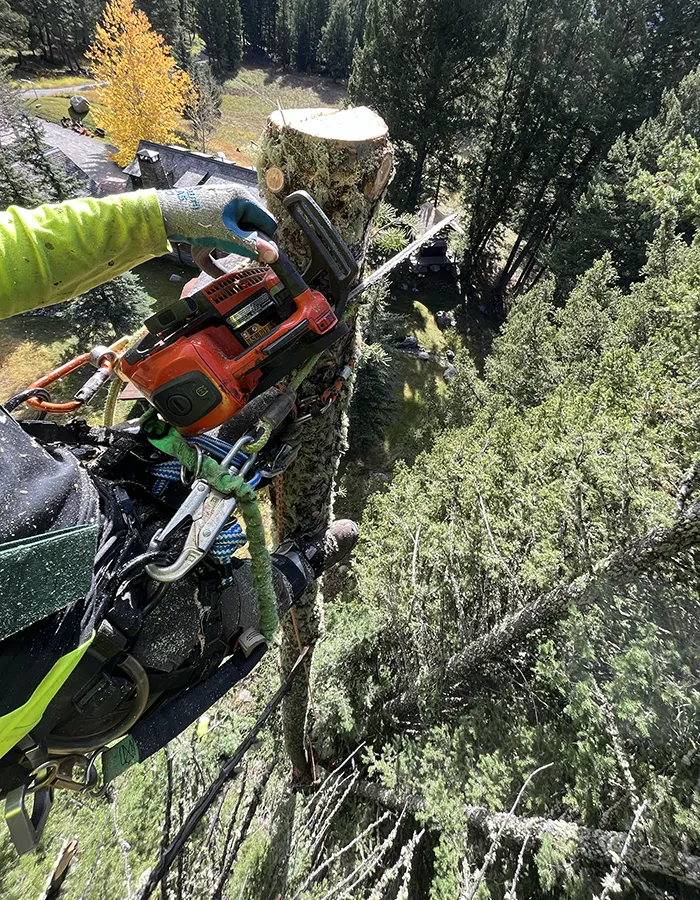
Why Delaying Fuel Reduction Work in a Wildfire-Prone Area Compounds Risk Every Season
Dead conifers don’t stabilize over time. They dry out, and as that moisture leaves the wood, their ignition threshold drops. A standing dead tree that felt manageable to address last year is a more volatile fuel load this year.
Understory clearing deferred across even one additional growing season allows conifer encroachment to quietly close the gaps between ladder fuels and your home ignition zone. What started as targeted hazardous fuels reduction work becomes large-scale thinning when that window narrows.
If your property sits in a drainage below Lone Mountain, you already know how quickly wind moves through those corridors. In a wildfire-prone area with limited fire department access, defensible space isn’t a precaution; it’s the primary line of protection your structure has.
Forest fuel management and understory clearing done while conditions are still manageable produces a concrete result: a defensible perimeter that gives your home a measurable advantage. Wildfire risk reduction works best when the problem is contained, not after it has been compounding for years.
Frequently Asked Questions
Why Does a Credential-Backed Property Risk Assessment Supports Insurance and HOA Documentation?
TRAQ qualification is a structured methodology, not a title. A Tree Risk Assessment Qualification means every tree on your property is evaluated against a standardized framework – condition, species, load, proximity to structure – producing documentation that holds up in formal contexts. That matters when you’re talking to an insurance adjuster or an HOA board about defensible space compliance.
A homeowner site visit from a fire department is genuinely useful, but it isn’t designed to generate a defensible written record. General contractor walkthroughs carry the same limitation. If your insurer or a Community Wildfire Protection Plan coordinator asks for documented evidence of a professional wildfire risk assessment, informal inspections won’t satisfy that request.
If you own property near Lone Moose Meadows or in Mountain Village, you’re likely already navigating HOA requirements around vegetation management. A credential-backed property risk assessment gives you something concrete to submit, not just a verbal confirmation that work was done.
How Does Selective Tree Thinning and Canopy Spacing Reduce Fire Risk Without Stripping Forest Character?
Effective wildfire mitigation does not mean stripping your property bare. That assumption leads many people to contractors who show up with excavators and leave behind something that looks nothing like the forested lot they bought.
Selective tree thinning works differently. Every removal decision is weighed against canopy spacing, species value, and what the remaining trees need to stay structurally sound. The goal is to break crown continuity so fire cannot travel through connected canopies, not eliminate the forest character that defines Big Sky properties.
In mixed forest and open meadow zones like Lone Moose Meadows, that precision matters most. Ladder fuel removal eliminates the mid-story vegetation that lets ground fire climb into the canopy. Mastication and mulching processes removed material on-site, reducing haul costs and returning organic matter to the soil. Creating a zero-fuel zone around structures directly addresses ember protection, since wind-blown embers ignite most homes before flames ever arrive.
What Happens From Your First Call to a Completed Defensible Space Plan
Engaging with us starts simply: you reach out, describe your property and concerns, and we schedule an on-site visit. Big Sky is a named service area for us, not a stretched radius.
On-site, a TRAQ-qualified arborist walks every zone of your property, evaluating fuel load, canopy spacing, ladder fuel conditions, and proximity to structures. If your property borders terrain like the drainages below Lone Mountain, wind-driven ember transport factors directly into how we prioritize the work.
From that assessment, we build a wildfire action plan specific to your parcel. That includes a prioritized fuel-reduction scope, dead and diseased tree removal, selective thinning recommendations, and, where relevant, home-hardening details such as vent screening and non-combustible materials around structure perimeters.
If you’re navigating a cost-share program through a state or federal agency, we can help you understand what qualifies and how to document the work. The assessment itself produces paperwork you can use for insurance review or HOA compliance.