
Tree Removal Service In Belgrade
Safe tree removal for Belgrade families, by a Belgrade family
How to Spot the Signs a Tree Need Removal Before It Becomes a Bigger Problem
You notice a leaning tree near your fence line after a heavy windstorm. You aren’t sure if it needs removal or just some pruning. Situations like that come up often, and knowing the difference matters. That’s exactly where a Tree Removal Service in Belgrade can help you figure out what you’re actually dealing with.
Dead branches dropping without wind, a trunk leaning noticeably toward a structure, bark that’s soft or peeling in large sections. These are signs a tree needs removal, not just a trim. Root rot often goes unnoticed until the base of the tree feels spongy or mushrooms appear at ground level. Storm-damage tree removal is sometimes unavoidable after a big weather event.
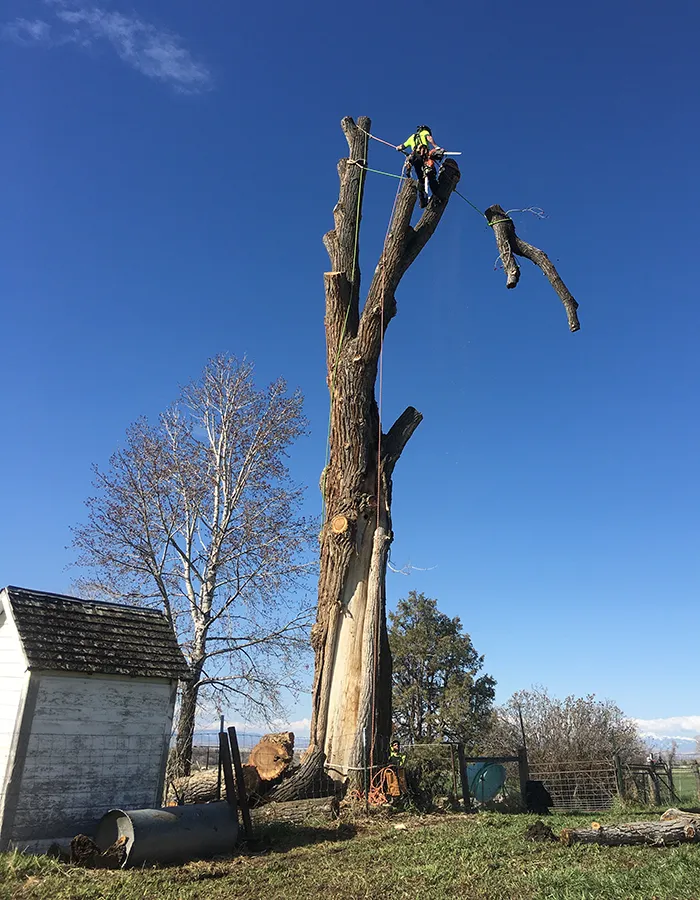
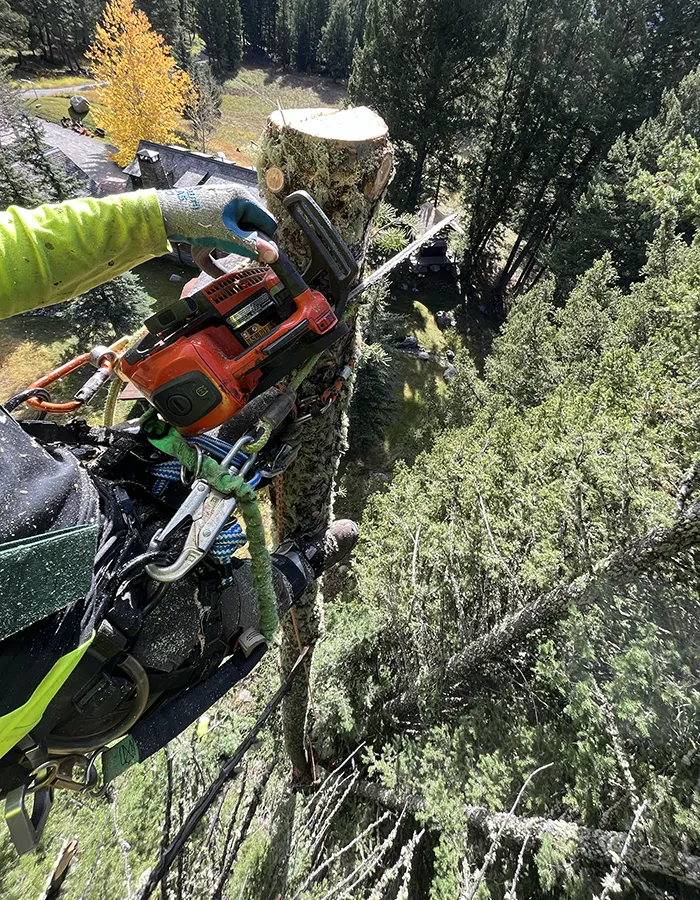
Why Local Knowledge of Dry Creek Soils and Belgrade Tree Species Changes the Removal Approach
Drainage patterns create pockets of elevated soil moisture across nearby properties. That moisture affects root spread, root depth, and how firmly a tree is actually anchored – factors that matter a lot during removal planning and tree risk assessment.
Mountain pine beetle pressure has moved steadily through the Belgrade area, leaving behind standing dead timber that looks stable but isn’t. Along the Union Pacific Railroad corridor, older trees have had decades to develop root systems that interact with compacted and disturbed soils in unpredictable ways. If you’re working with a crew unfamiliar with local tree health history, those details don’t show up on the job estimate.
Dutch elm disease has also touched Belgrade’s urban forest, and distinguishing a structurally compromised elm from a healthy one takes more than a visual pass. Residential tree care in a place like Belgrade requires actual arboriculture knowledge, not just equipment.
Frequently Asked Questions
How Does the Removal Process Work?
The process starts with a free estimate. The same crew that walks your property and provides tree removal pricing shows up to do the work. No handoffs, no surprises.
During the estimate, we assess the tree’s condition, the surrounding space, and what the removal actually involves. For larger rural properties near Amsterdam Road, that sometimes means full land clearing or tree and shrub removal across a wider area.
On removal day, the crew works methodically through the job. Once the tree is down, you choose what happens next: stump grinding, full stump removal, or leaving it. If you want firewood, we can set it aside. Debris removal is included.
If you are dealing with a situation that cannot wait, emergency tree removal and emergency tree service are available. Reach out, describe what you are seeing, and we will take it from there.
What Difference Does a Credentialed Tree Risk Assessment Makes?
ISA Certified Arborists aren’t just people with a certificate on the wall. That credential requires passing a rigorous exam on tree biology, structural assessment, and safe removal practices. It means the person evaluating your tree actually understands what they’re looking at.
TRAQ – Tree Risk Assessment Qualified – goes further. A TRAQ assessment follows a standardized, science-based methodology that produces documentation you can use. If you have a neighbor dispute over a tree near a shared fence line off Jackrabbit Lane, or your insurance company needs formal verification of hazard, that written assessment carries real weight.
If you’re comparing tree removal companies and wondering whether credentials matter, here’s the practical answer: a credentialed arborist can tell you with confidence whether removal is actually necessary, or whether a less costly option handles the risk.
What Changes When Tree Removal Is Delayed?
Most people assume a declining tree can just be watched for another year. That assumption is understandable, but it closes doors.
As a tree loses structural integrity, simpler interventions stop being viable. Cabling and bracing work when a tree still has enough sound wood to support the hardware. Tree cabling and bracing, structural pruning, crown cleaning, and tree thinning are all options that require the tree to be in a manageable condition. Once decay progresses far enough, removal becomes the only path.
In some neighborhoods, tight residential blocks mean a declining tree is rarely just your problem. Proximity to structures, fences, and neighboring lots makes complex removal much harder to execute cleanly than removal before the tree deteriorates further.